Back to All Blogs
LinkedIn Article 5 min readMarch 26, 2026

From Models to Agents: A Deep Dive into AI Agent Systems

This article explores the evolution from static machine learning models to dynamic AI agent systems powered by Large Language Models. It details how multi-agent workflows, memory integration, and specialized tools overcome traditional SaaS automation limits.

#Artificial Intelligence#Generative AI#AI Agents#Large Language Models#System Architecture
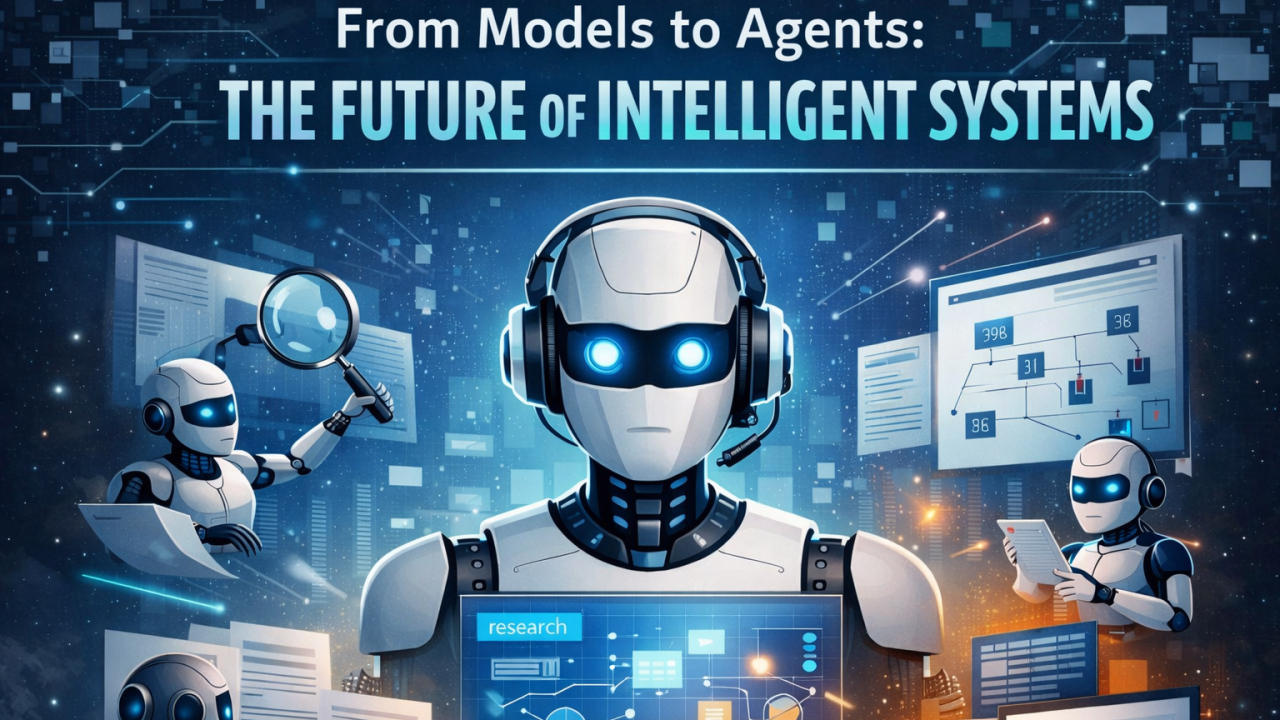
From Models to Agents: A Deep Dive into AI Agent Systems

Overview & Architecture

Artificial intelligence systems have advanced significantly from narrow, rule-based programs and predictive models to sophisticated agentic frameworks. While traditional Software-as-a-Service (SaaS) platforms automate predefined, rigid workflows, they often struggle in dynamic, domain-specific environments. AI agent systems powered by Large Language Models (LLMs) bridge this gap by functioning as autonomous reasoning engines capable of planning, utilizing external tools, and maintaining conversational or operational memory to solve complex multi-step problems.

Key Technical Insights

  • LLM as the Reasoning Core: The LLM acts as the central orchestration unit, interpreting user intent, assessing intermediate steps, and adapting action sequences dynamically.
  • Multi-Agent Collaboration: Breaking down expansive tasks into specialized agent roles—such as research, filtering, summarization, and formatting agents—enhances execution accuracy and modularity.
  • Memory & Context Management: Persistent memory architectures allow agents to retain state across sessions, ensuring contextual awareness and personalization.
  • Tool Augmentation: By leveraging external APIs, databases, and code execution environments, agents extend their utility far beyond text generation into real-world task execution.

Implementation Details & Trade-offs

Building robust agentic workflows introduces challenges regarding latency, determinism, and cost. While multi-agent pipelines improve quality through specialization, coordinating multiple LLM calls increases token consumption and response times. Developers must balance autonomous adaptability with strict guardrails to prevent infinite loops or unintended tool executions in production environments.

Practical Takeaways

  • Leverage multi-agent architectures to decompose complex workflows (e.g., automated research and reporting) into specialized, manageable subprocesses.
  • Implement external memory and database integrations to maintain high context retention and domain accuracy.
  • Design modular tool interfaces that empower LLMs to interact safely with external APIs and enterprise data sources.